Background
The Atherton Wastewater Treatment Plant (WWTP), operated by Tablelands Regional Council in Far North Queensland, was experiencing persistent operational issues. These included high levels of fats, oils, and grease (FOGs), irregular septic waste loads, and severe bacterial foaming. The plant, a dual-train SBR system, was operating beyond its design capacity, leading to poor sludge settling, elevated suspended solids, and increased bio-solids haulage costs.
To address these challenges, a bioaugmentation strategy was introduced using WTS 13-Biotifx Ultra—a high-performance microbial treatment designed to improve wastewater treatment efficiency and reduce operational disruptions.
WTS solution
WTS implemented a targeted bio-augmentation program using WTS 13-Biotifx Ultra.
- Initial slug dosing of 5 mg/L followed by daily maintenance doses of 1 mg/L
- Manual application of the powdered product into the influent channel using dissolvable bags
- Visual inspections and chemical monitoring to assess treatment effectiveness
- Secondary trial in the aerobic digester to evaluate sludge reduction and dewatering improvements
The treatment was designed to outcompete filamentous bacteria, reduce foaming, and enhance sludge settleability in the wastewater treatment process.
WTS key solutions
- WTS 13-Biotifx Ultra: A proprietary blend of Bacillus strains and micronutrients targeting FOGs and organic sludge
- Dual application: Dosed at the plant inlet and directly into the aerobic digester
- No specialised equipment: Easy-to-implement dosing method using dissolvable bags
- Ongoing support: Regular monitoring and optimisation by WTS technical experts
 |
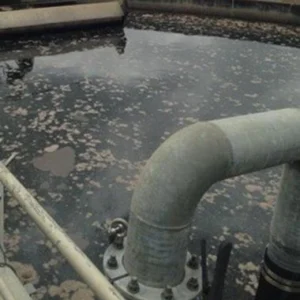 |
| SBR basin Before Biotifx 13 Ultra Treatment |
SBR basin After Biotifx 13 Ultra Treatment |
Results and Benefits
- Microbiologically related foaming significantly reduced – improving operational reliability
- Improved effluent quality – Suspended solids reduced from 49 mg/L to below 10 mg/L, enhancing wastewater treatment outcomes
- Enhanced sludge settleability – Resulting in more compact sludge and better separation
- Reduced operational time – Sludge wasting times dropped from 80 to 65 minutes; aerobic digester dewatering time cut from 90 to 55 minutes
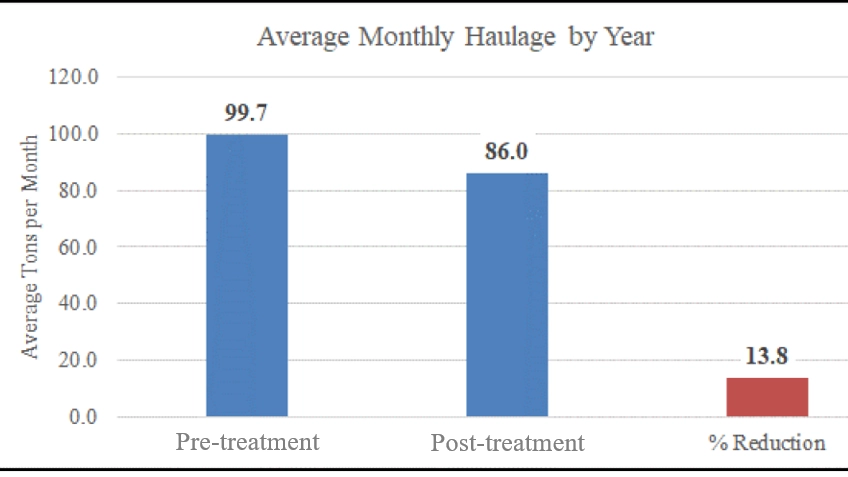
- Lower bio-solids haulage – Monthly haulage significantly reduced saving disposal costs
- Cost-effective treatment – Ongoing treatment delivered savings of around $800/month
- Scalable solution – Bioaugmentation treatment expanded to other regional plants including Tinaroo and Yungaburra WWTPs