Home / Technologies / Pure 3 Series Chlorine Dioxide Generator

Pure 3 Series Chlorine Dioxide Generator

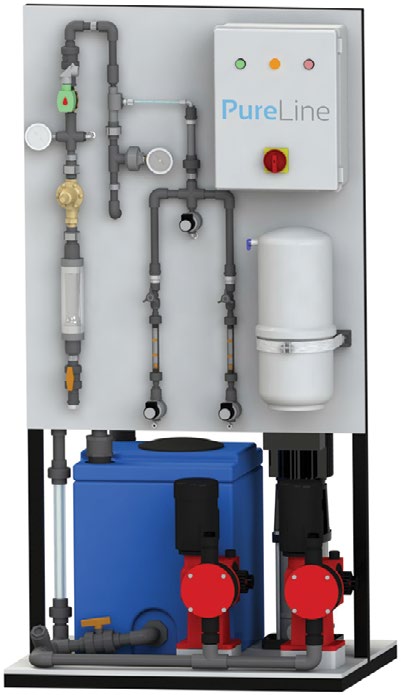
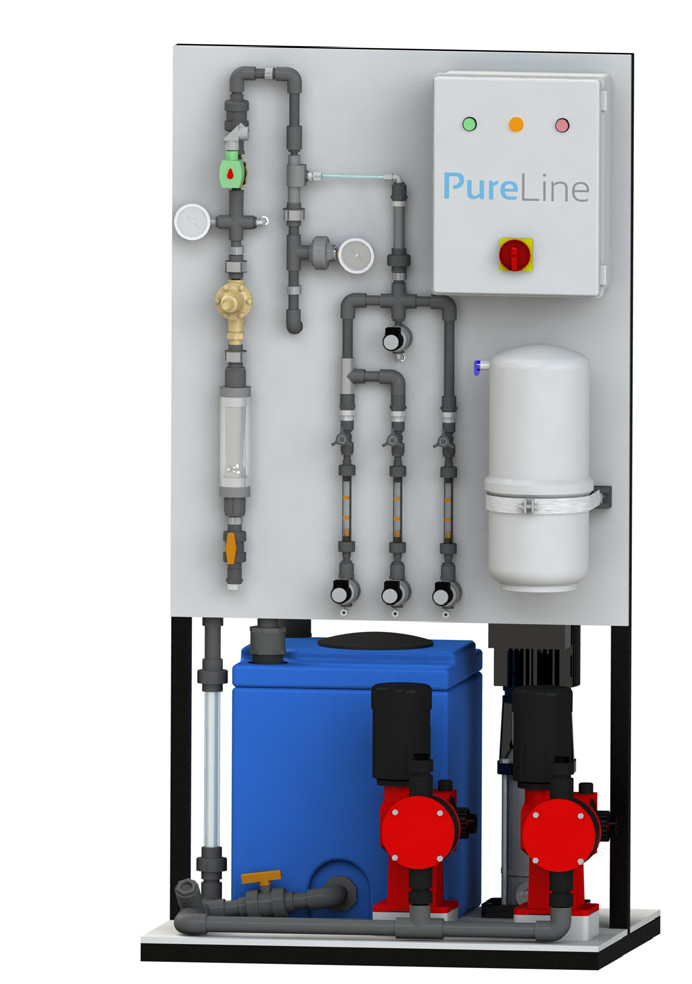
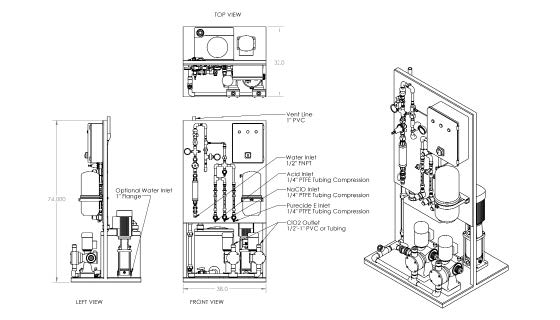
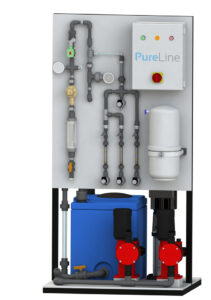
PureLine Pure 3 Series Chlorine Dioxide Generator

Chlorine dioxide (ClO₂) generation systems produce ClO₂ on site, removing the need to store or handle unstable disinfectants. Depending on site demand, chlorine dioxide is generated using two-chemical or three-chemical processes, or electrochemical methods, allowing output to be matched to flow and operating conditions.

Where consistent, controllable disinfection is required, WTS provides the Pure 3 Chlorine Dioxide (ClO2) Generator line from PureLine, a world-leading manufacturer. Renowned for its control, reliability, production, safety features, and low maintenance properties, this generator can ensure the longevity of your systems.

Learn more about the Pure 3 Chlorine Dioxide (ClO2) Generator and how it can optimise your systems.

Chlorine dioxide (ClO₂) generation systems produce ClO₂ on site, removing the need to store or handle unstable disinfectants. Depending on site demand, chlorine dioxide is generated using two-chemical or three-chemical processes, or electrochemical methods, allowing output to be matched to flow and operating conditions.

Where consistent, controllable disinfection is required, WTS provides the Pure 3 Chlorine Dioxide (ClO2) Generator line from PureLine, a world-leading manufacturer. Renowned for its control, reliability, production, safety features, and low maintenance properties, this generator can ensure the longevity of your systems.

Learn more about the Pure 3 Chlorine Dioxide (ClO2) Generator and how it can optimise your systems.

Signs Your Site May Need Chlorine Dioxide Generation

Signs that existing disinfection methods are no longer providing consistent control often develop gradually. These early indicators usually point to the need for a more controlled approach to disinfection.

1. Inconsistent Microbial Control Disinfection performance varies as water quality, flow, or operating conditions change. Residuals are difficult to maintain, and treatment effectiveness drops during load fluctuations.
2. Ongoing Biofilm or Biological Regrowth Biofilm continues to form on surfaces despite routine dosing and cleaning. This can indicate the disinfectant being used is struggling to penetrate or control biological activity effectively.
3. Increasing Dependence on Bulk Chemicals Storing, handling, and frequently replenishing disinfectant chemicals becomes more complex, introducing additional safety, logistics, and operational risk.

Symptoms of Poorly Controlled Disinfection

When these signs are left unresolved, they typically escalate into broader operational and compliance challenges.

1. Elevated Operational Risk Unstable disinfection increases the likelihood of microbial breakthroughs, creating risk across cooling water, process water, and potable systems where consistent control is critical.
2. Higher Chemical Use & Reactive Operation Operators spend more time adjusting dose rates and responding to changing conditions, often increasing chemical use without achieving stable disinfection.
3. Increased Compliance & Monitoring Pressure Difficulty maintaining consistent disinfection can lead to tighter oversight, increased reporting requirements, and reduced confidence in system performance.

Chlorine Dioxide Generators: How We Solve the Problem

Chlorine dioxide generation is applied where sites require consistent, controllable disinfection without the instability associated with traditional dosing methods. We provide the PureLine Pure 3 Series Chlorine Dioxide Generator, which produces ClO2 on site and is applied as needed, reducing reliance on bulk storage and improving control.

Our approach to chlorine dioxide generation systems includes:

  • On-site chlorine dioxide generation that produces ClO2 only when required, improving safety and reducing the need to store unstable disinfectant solutions.
  • Controlled output using ClO2 generators, allowing dosing to be matched to flow, demand, or residual targets so disinfection remains effective as operating conditions change.
  • Multiple control and integration options, including flow-paced and residual-based control, enabling chlorine dioxide generation systems to align with how each site manages disinfection.
  • Designs suited to continuous or intermittent operation, supporting applications where demand varies throughout the day without compromising consistency.
  • Integration into broader water treatment programs, where chlorine dioxide generation works alongside monitoring, control strategies, and operator support to deliver stable, reliable disinfection.

With decades of experience across Australian industries, we can tailor your chlorine dioxide generator to suit your plant’s systems. After installing your chlorine dioxide generator, we provide genuine ongoing support to help your Pure 3 Series Chlorine Dioxide Generator consistently provide optimal performance.

Why Choose the Pure 3 Series Chlorine Dioxide Generator?

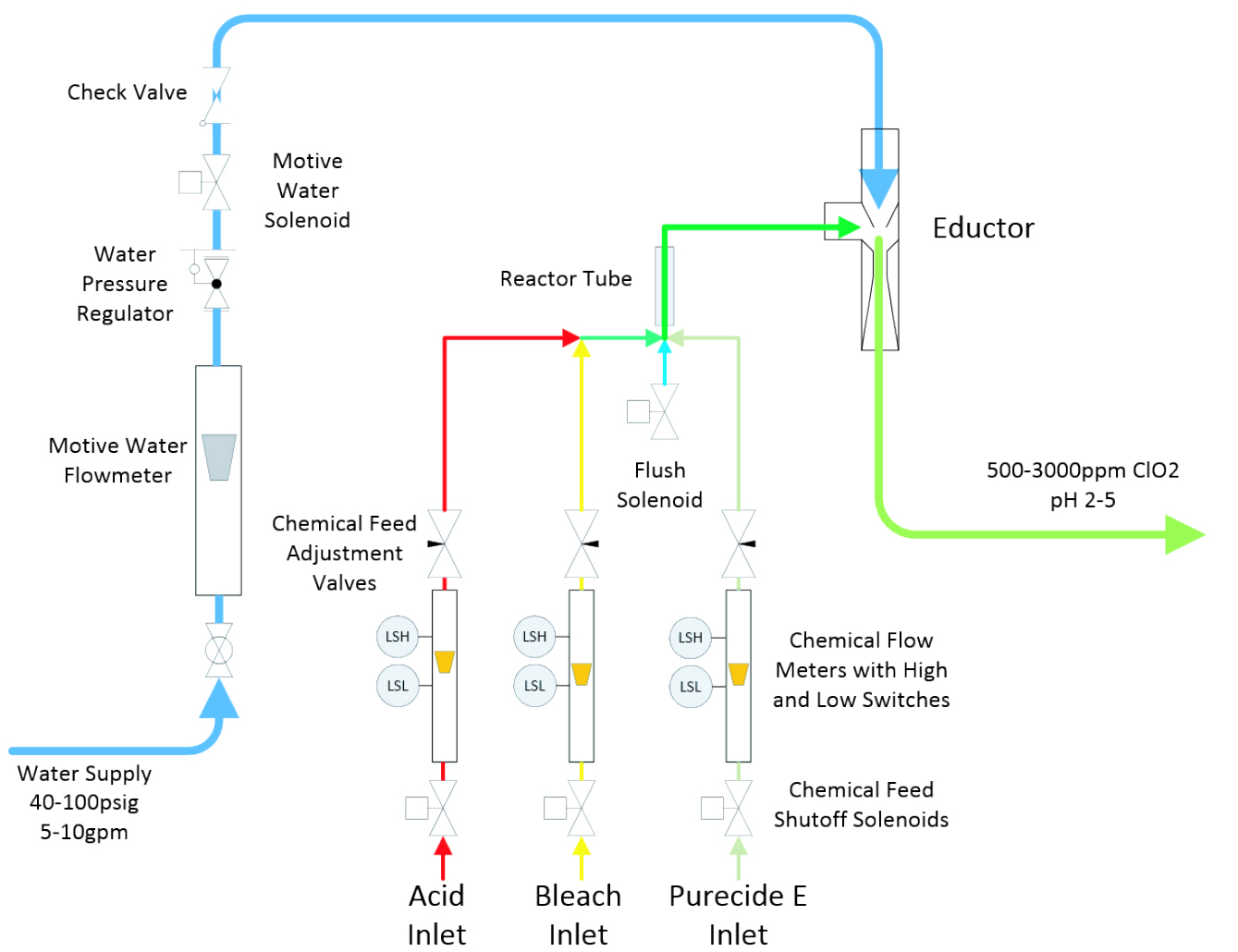
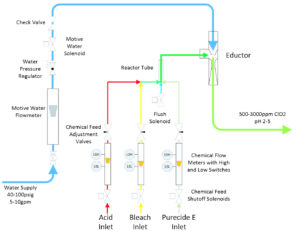
The Pure 3 Chlorine Dioxide (ClO2) generator line from PureLine combines affordability with optimal efficiency and safety. Utilising three precursors (sodium chlorite, sodium hypochlorite, and hydrochloric acid), the Pure 3 system gives you the best in safe, high efficiency production of low to medium volumes of ClO2. With low maintenance cost and reliable operation, the Pure 3 system can be built with a simple frame configuration or with a fully enclosed cabinet.


Features and Benefits

Affordable, efficient system One of the most affordable ClO₂ generators available from PureLinek.
Low maintenance cost With few moving parts, the Pure 3 features low maintenance cost.
24/7 Security and Monitoring Via the optional PureComms Security package.
Safety Multiple safety interlocks.
Enhanced control Control mechanisms that maximise efficiency and safety.
Broad adjustable production range Choose how much chlorine dioxide you wish to generate. From 0.5kg/day to 45kg per day.

Solving Complex Water Issues

Real World Examples

PROBLEM

Chlorine Gas Replacement

Client Issue: A coal-fired power station needed to replace an ageing chlorine gas dosing plant used for cooling disinfection.

WTS Solution: WTS safely decommissioned the existing chlorine gas plant, then designed, engineered, installed and commissioned a chlorine dioxide generation system, supported by temporary hypochlorite dosing during the changeover.

Benefits: Achieved required disinfection compliance, removed chlorine gas hazards, reduced corrosion risk, and maintained stable operation without downtime.
Read more…

PROBLEM

Cooling Capacity Loss

Client Issue: A lake-cooled power station experienced reduced condenser cooling capacity and generator degradation during hot periods, with inspections identifying biofilm on condenser tubes and no disinfection system in place.

WTS Solution: WTS implemented a chlorine dioxide program and engineered a chlorine dioxide generation system to restore biological control while maintaining low corrosion impact on copper-based condenser tubes.

Benefits: Restored cooling performance, removed biofilm, prevented further generator degradation, and improved operational safety.
Read more…

Talk to a Specialist at WTS Today

Where sites require consistent, controllable disinfection, WTS can help supply a reliable chlorine dioxide generation system. Get in touch with WTS on 1300 955 015 to learn more about our chlorine dioxide generators or get a risk assessment today.

Frequently Asked Questions

If you would like to learn more about how chlorine dioxide generators can help your system, browse the frequently asked questions below

What is a chlorine dioxide generator?

Chlorine dioxide generators are an efficient way to generate a powerful disinfection agent for use in a wide range of water treatment applications, such as legionella control, secondary disinfection, food processing and brewing, to name a few.

How efficient is a chlorine dioxide generator?

Efficiency depends on the generation method used. Two chemical and three chemical chlorine dioxide generation systems commonly achieve conversion efficiencies of around 95% to 98% under correct operating conditions. Electrochemical systems can also produce high-purity chlorine dioxide, with reported conversion efficiencies typically above 80%, making system selection and setup important for achieving consistent performance.

Is chlorine dioxide better than an ozone generator?

Chlorine dioxide and ozone generators serve different purposes and suit different system requirements. Ozone is a strong oxidant, but it typically involves higher energy use and more complex safety controls. Chlorine dioxide is often selected where on-site generation, controlled dosing and straightforward integration into existing water systems are priorities.

Parameter Units PureLine 3 Model
ClO2 Output Capacity kg/day 0.5kg to 45 kg
Electricity requirement 220VAC 1ph 30A service (60A for larger units requiring a ClO2 pump)
Inlet water 20 Mesh filtered water. >350 kPa (with less than 70 kPa variability)

19L/min – 114L/min depending on capacity

PLC & HMI Programmable Relay (Optional PLC and HMI)

•  Alarm / Run Status / Remote Start / Stop / Manual Controls


Chemical usage

• Purecide E — 4.65 kg/kg ClO2

•  15% HCl — 4.7 kg/kg ClO2

• 15% NaOCl — 3.7 kg/kg ClO2

Cabinet White Polypropylene 3 compartment (generator, electrical and acid pump)
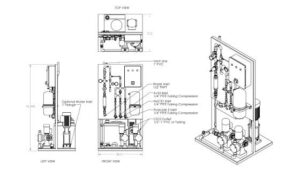
Dimensions (WxDxH) mm Base Model 965 x 407 x 1067
Weight kg 34
Co-products –  Salt (NaCl ~1.5 kg/kg ClO2)

–  Excess HCl <1 kg/kg ClO2

STANDARD INCLUSIONS + OPTIONS

✓= Standard Supply o = Optional Supply

Equipment
Self contained unit
ClO2 injection pumps o
Input chemical storage tanks o
Produced ClO2 break tank o
Board mount
Cabinet mount o
PCA analyser o


Instrumentation & Controls
Control Panel compliant with AS/NZS 3000, IP55
PLC control system with HMI touch screen
Full redundancy PLC control system o
Flow pacing capability utilising external flowmeter signal)
Water flow meter o
Production tracking and remote system monitoring o
PCA-970 Chlorine Dioxide Residual Monitoring System o


Find out how we can solve your water treatment problems

CONTACT A WATER TREATMENT EXPERT