Nocardia Foam Reduction and Reduced Effluent Suspended Solids
Summary
A Far North Queensland municipal wastewater treatment plant (WWTP) dosed with WTS 13-Biotifx Ultra showed a significant decrease in Nocardia foaming and a vast reduction in effluent suspended solids. Additional operational improvements were reduced sludge yields, decreased SVI 60 and faster recovery from septic influent events.
Background
The municipal WWTP has an average daily influent flow of 1.8 – 2.0 MLD (mega litres per day), which can increase 3 fold during wet weather events. The treatment plant is considered overloaded as it is designed for maximum dry weather flows of 1.5 MLD. The plant receives high fats, oils and grease content from the high number of eating establishments in the local area, and Nocardia foaming is a constant problem in the SBR basin. At the beginning of the case study the basin was covered in Nocardia foam.


Objectives
The case study objective was to demonstrate improved plant performance and decrease Nocardia foaming and effluent suspended solids with WTS 13-Biotifx Ultra.
Method
Historical data was available from the plant, including effluent suspended solids, SSV and other plant performance parameters. WTS 13-Biotifx Ultra was slug dosed to the system at 5 mg/L, with ongoing treatments of 1 mg/L of WTS 13-Biotifx Ultra dosed to the inlet structure of the plant Mon-Friday. As no operators were onsite on weekends, a slug dose of 2 mg/L was dosed Friday afternoon.
Plant Performance Evaluation
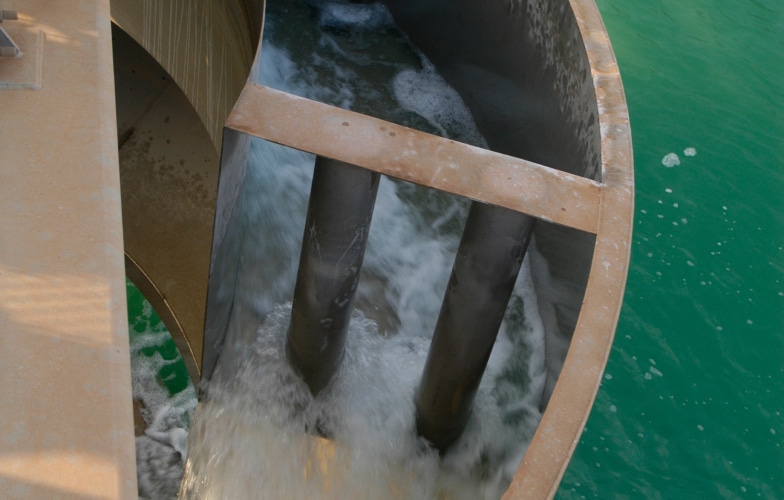
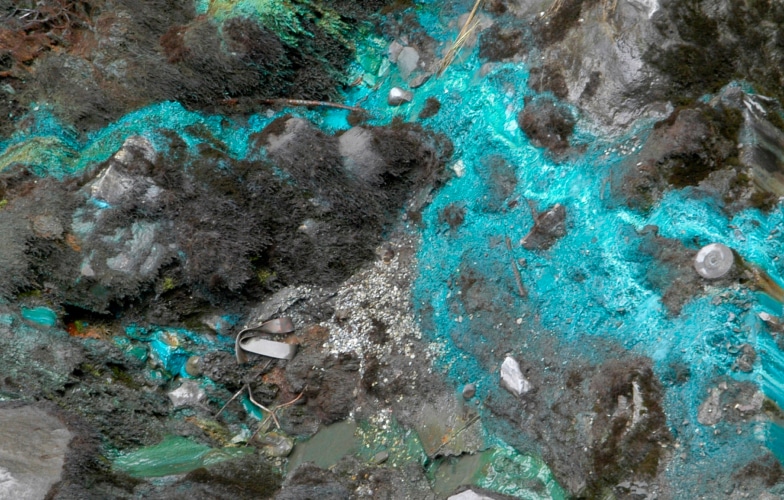
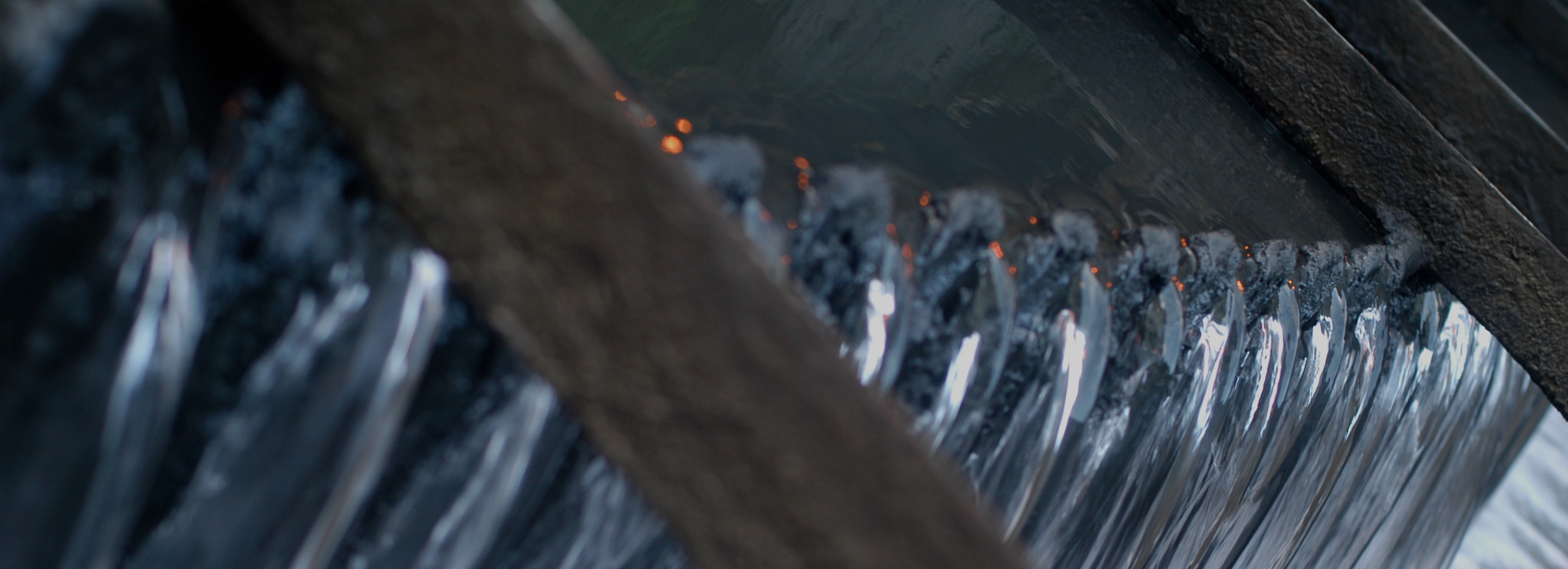
The Nocardia foaming was evaluated before and after the WTS 13-Biotifx Ultra treatment with Nocardia foaming significantly reduced during the trial (see before and after pictures above).
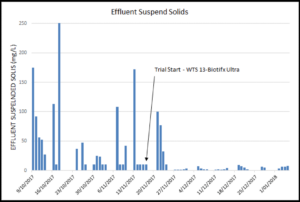
A large reduction in effluent suspended solids was noted when comparing before and after the trial (see graph 1).
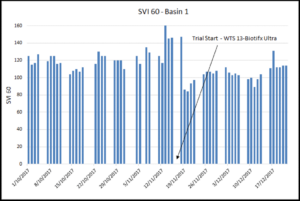
SV 60 was reduced during the trial indicating a better settleability and more compact sludge in the SBR (see graph 2).
Results & Summary
- Nocardia foaming was significantly reduced, leading to better clear water decanting during the settling period in the SBR basin.
- Effluent suspended solids were greatly reduced and more consistent.
- SVI 60 reduced indicating a better settle-ability and more compact sludge.
- Recovery from septic influent events were reduced from 2-3 days to 1 day.
- Sludge wasting time (WAS) reduced from 80 minutes to 65 minutes.